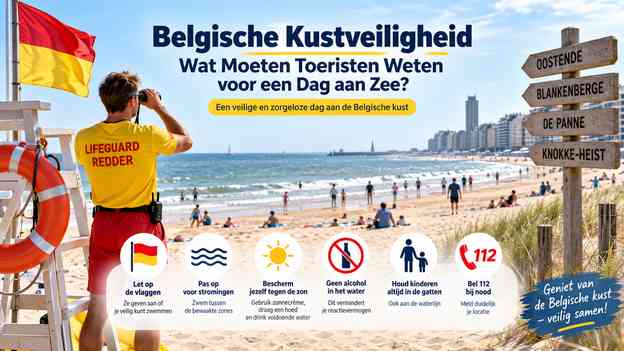
A day at the Belgian coast can be a refreshing addition to a Europe itinerary, whether you are visiting Oostende, De Panne, Knokke-Heist, Blankenberge or Nieuwpoort. But the North Sea is not a calm swimming pool. Water temperature, wind, currents and tides can change conditions quickly.
For Indian travellers, the most important rule behind Belgische Kustveiligheid: Wat Moeten Toeristen Weten voor een Dag aan Zee? (veiligheid kust België) is simple: swim only in a supervised area, follow the beach flags, and never assume that a sunny afternoon means safe water.
The quick answer: how to stay safe at the Belgian coast
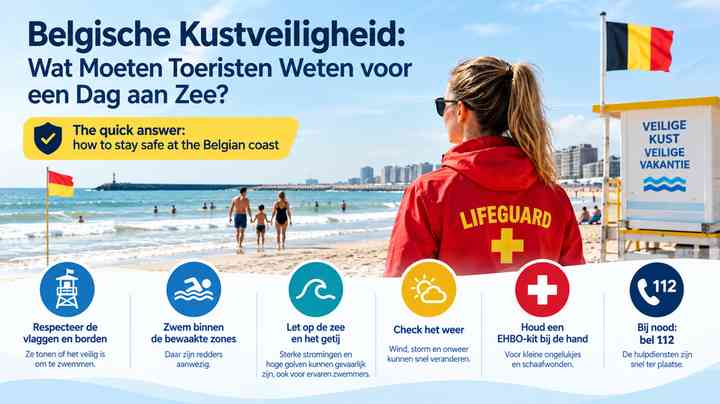
Choose a beach section with an open lifeguard post, stay inside the marked swimming zone, check the flags before entering the water, and listen to the lifeguards without debate. Avoid swimming near groynes, piers and unguarded stretches of beach.
If you travel with children, keep them within arm’s reach in the water. If there is an emergency, call 112 for ambulance, fire or police assistance in Belgium.
This approach matters especially if you are used to warmer, gentler beaches. The Belgian coast faces the North Sea, where cold water and strong currents can surprise even confident swimmers.
Start with a supervised swimming area
The safest place to swim is a designated, supervised bathing zone. Look for an active lifeguard station, official beach signs and yellow buoys in the water. These buoys mark the zone where lifeguards monitor swimmers.
In the main summer period, lifeguard coverage is generally strongest in July and August, when stations along the coast typically operate daily from 10:30 am to 6:30 pm. Coverage is more limited in May, June and early September, and individual locations may have different arrangements.
Do not assume that a beach is supervised merely because it is busy or close to a hotel. Before changing into swimwear, check that the lifeguard post is open for the day.
A good rule for families is: if you cannot see an active lifeguard post and the marked swimming area, treat the sea as unsuitable for swimming.
Understand Belgian beach flags before entering the water
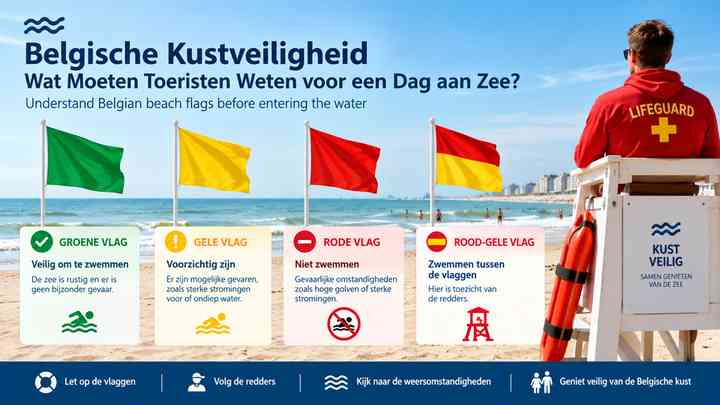
Beach flags are the quickest safety message on the Belgian coast. Check them every time you go into the sea, not just once in the morning. Wind and waves can alter conditions through the day.
| Signal | Meaning | What you should do |
|---|---|---|
| Green flag | Swimming and bathing are permitted | Swim only within the supervised zone |
| Yellow flag | Swimming is permitted but conditions need caution | Do not take inflatables or floating objects into the water |
| Red flag | Swimming and bathing are prohibited | Stay out of the sea |
| Red windsock | Offshore wind risk | Keep inflatable boats, rings and mattresses on the beach |
| Yellow buoys | Supervised swimming boundary | Remain between the buoys |
A yellow flag is not a reason to cancel a beach visit, but it is a reason to be more conservative. Do not use inflatable loungers, rubber rings, pool noodles or toy boats in the water. Offshore winds can pull them away from shore faster than expected, tempting people to chase them into deeper water.
A red flag is non-negotiable. Do not enter the water for “just a quick dip,” photographs or to retrieve an object.
Why the North Sea can feel tougher than expected
Many visitors judge safety by wave height alone. That is incomplete. The Belgian coast can be risky even when the sea looks relatively calm.
Cold water can cause an abrupt physical reaction, including gasping, rapid breathing and loss of confidence. This is particularly relevant for travellers arriving from India during a European summer, because air temperature on the beach can feel pleasant while the sea remains much colder than expected.
Currents are another concern. Water moving around groynes, jetties and harbour structures can create strong flows and whirlpools. Swimming near these structures is dangerous and may be prohibited.
Tide conditions also change the shape and depth of the beach. A route that felt shallow an hour ago can become deeper or more difficult to cross later. Do not walk far out simply because the water initially seems ankle-deep, and do not let children wander ahead while adults remain onshore.
What to do if you are caught in a current
If you feel yourself being pulled away from the shore, do not fight the water by swimming directly against the current. Panic and exhaustion are often more dangerous than the current itself.
Instead:
- Try to stay calm and float or tread water.
- Raise an arm and signal for help.
- Swim parallel to the shoreline if you can do so without tiring yourself.
- Move toward the supervised area only when you are able.
- Follow lifeguard instructions immediately.
If you see another swimmer in trouble, alert a lifeguard or call for emergency help. Avoid entering the water for a rescue unless you are trained and it is safe to do so; an unplanned rescue can create a second casualty.
A safer beach plan for families with children
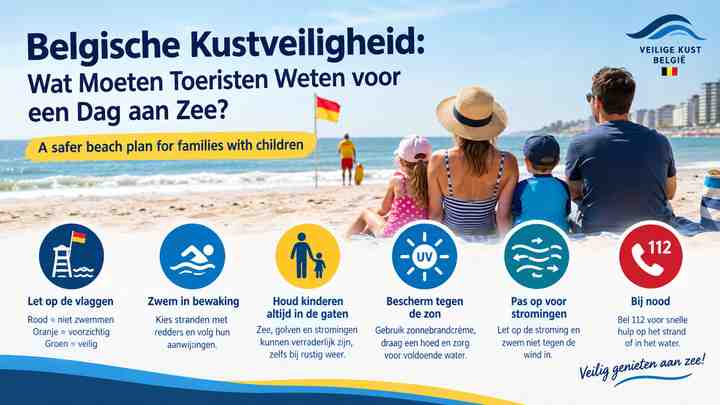
The Belgian coast is family-friendly, but open water requires closer supervision than a hotel pool. Young children can get disoriented in crowds, and shallow water can become hazardous when waves or currents are present.
Set up your towel and bags close enough to the supervised zone that you can quickly reach the water. Give children a simple meeting point, such as the lifeguard post, and teach them not to leave the beach area with strangers or go searching alone.
Many coastal locations provide child-identification wristbands through local beach services or tourist offices. If available, write the child’s name and a working phone number on the wristband. This is especially useful for overseas travellers with a local SIM or roaming-enabled phone.
For the water itself, use a strict rule: children should not enter alone, even if they are comfortable swimmers. Arm’s-reach supervision is the safest standard for small children.
Keep phones and valuables practical, not distracting
A smartphone is useful at the beach for maps, weather checks, translation, local transport and emergency calls. It should not become a distraction when children are in or near the water.
Carry a fully charged phone in a waterproof pouch, but do not rely on the pouch as a substitute for supervision. Before leaving your accommodation, save the address of your beach access point or hotel; in an emergency, responders need an accurate location.
Indian travellers using international roaming should confirm that calls to Belgian emergency services are supported. The European emergency number 112 is free to call. If urgent police assistance is specifically needed, Belgium also uses 101.
Keep valuables in a zipped, water-resistant bag and avoid leaving passports, wallets or expensive electronics unattended while swimming. A small power bank can be useful for a full day out, but keep it dry and away from heat and sand.
Weather, sun and hydration: risks beyond the water
Belgian coastal weather can change quickly. A warm-looking morning may turn windy or cool by late afternoon, so bring a light windproof layer as well as beachwear.
Do not overlook sun protection. North Sea breezes can make the sun feel less intense, while UV exposure still builds over several hours. Use sunscreen, sunglasses and a hat, especially for children. Reapply sunscreen after swimming or towel-drying.
Carry drinking water and snacks, particularly when travelling with children or older family members. If someone feels unwell, dizzy or unusually cold after swimming, get them out of the water, add warm layers and seek help from the lifeguards if needed.
Alcohol and open-water swimming are a poor combination. Even strong swimmers make slower decisions and tire more easily after drinking.
Respect separate areas for watersports
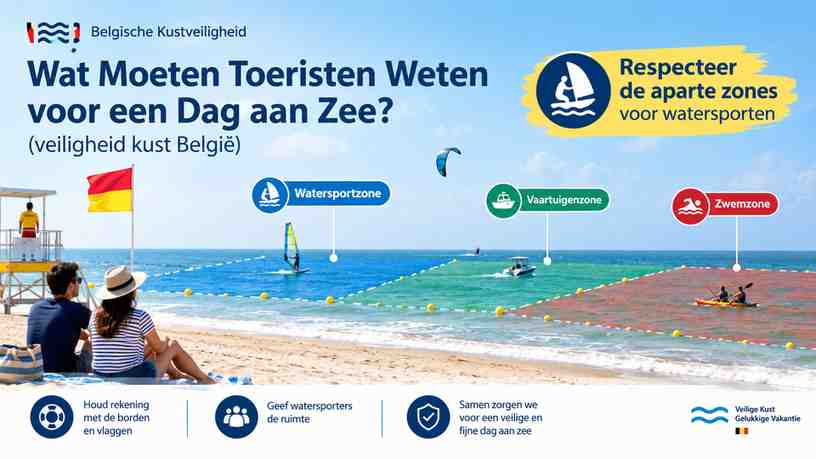
The coast may have designated areas for surfing, sailing, kite sports and other watersports. These are not ordinary swimming zones. Do not drift into them on foot or while swimming, and do not allow children to play near launching areas.
If you want to try a watersport, use a reputable local operator, follow its equipment and weather advice, and confirm whether your travel insurance covers the activity. This is particularly important for high-speed or wind-dependent sports.
What to do in a beach emergency
The nearest lifeguard is usually the fastest source of help within a supervised beach area. Point clearly to the person in trouble, describe what you saw and stay nearby if it is safe.
If no lifeguard is available or the situation is life-threatening, call 112. Be ready to provide:
- Your exact beach, town and nearest landmark
- The closest beach entrance, street or lifeguard post
- What happened
- How many people are injured or in danger
- Whether the person is in the sea, on the sand or near a structure
Do not hang up until the operator tells you to do so. Keep the phone line free afterward in case emergency services call back.
A practical checklist before your Belgian beach day
Before setting out, check the local forecast and decide which coastal town you will visit. On arrival, find the lifeguard station before choosing a place to sit. Look at the flag, identify the yellow buoys and explain the boundaries to everyone in your group.
Pack sunscreen, drinking water, warm layers, a charged phone, a waterproof pouch and a small first-aid kit. Leave inflatables for beach play only if conditions or flags advise against taking them into the sea.
Most importantly, be willing to skip swimming if the flag, weather or lifeguard advice says conditions are unsuitable. A beach day can still be enjoyable with a promenade walk, seafood lunch, sand play or a coastal tram ride.
FAQ
Is it safe to swim at the Belgian coast?
Yes, when you swim in an open, supervised bathing zone, stay between the yellow buoys and follow the displayed flags and lifeguard instructions. Avoid unguarded sections and structures such as groynes and piers.
What does a yellow flag mean at Belgian beaches?
A yellow flag means swimming is allowed but conditions require extra caution. Inflatable and floating objects, including rings and air mattresses, should not be taken into the sea.
Can tourists swim when no lifeguard is present?
You should not. Belgian coastal safety guidance directs swimmers to supervised areas. An unguarded beach section may have no immediate rescue response and can be unsuitable for swimming.
What emergency number should Indian tourists call in Belgium?
Call 112 for urgent ambulance, fire or police help. Call 101 for urgent police assistance in Belgium.
Are Belgian beaches suitable for children?
Yes, provided families use supervised zones, keep children under close adult supervision and follow beach flags. Identification wristbands, where available, can add reassurance in crowded areas.
What is the most important Belgische Kustveiligheid rule?
Swim only where lifeguards are on duty, remain between the yellow buoys and obey the flag system. That one habit substantially reduces the avoidable risks of a North Sea beach day.