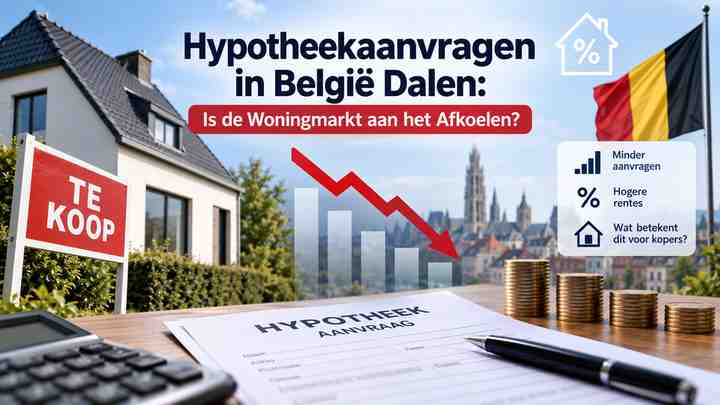
For families planning life in Belgium in 2026, housing remains the cost that weighs most heavily on the household budget. The latest official Household Budget Survey from Statbel, Belgium’s national statistics office, shows that housing, water, electricity, gas and other fuels account for 30.6% of average household spending. Food and non-alcoholic drinks come next at 14%, followed by transport at 11.7%.
That makes the central answer to Gezinsbudget België 2026: Welke Kosten Wegen het Zwaarst op Gezinnen? clear: a realistic Belgian family budget should start with accommodation and utilities, then build in food, transport, health, childcare, insurance and technology costs. For Indian families relocating for work, study or long-term settlement, the important point is that everyday costs vary significantly by region and household lifestyle—not just by salary.
The Belgian family budget at a glance
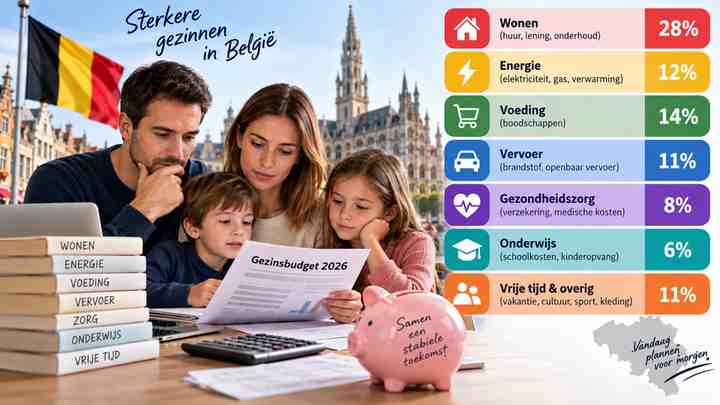
Statbel’s 2024 household survey is the latest detailed nationwide breakdown available for planning in 2026. It does not predict every family’s bill, but it is a reliable guide to which categories take the largest shares of household spending.
| Expense category | Share of average Belgian household budget |
|---|---|
| Housing, water, electricity, gas and other fuels | 30.6% |
| Food and non-alcoholic beverages | 14.0% |
| Transport | 11.7% |
| Recreation, culture and leisure | 7.9% |
| Restaurants, cafés and accommodation | 7.3% |
| Furniture, household equipment and maintenance | 5.0% |
| Health | 4.8% |
| Clothing and footwear | 3.7% |
| Alcohol and tobacco | 1.7% |
| Other spending categories | 13.3% |
The three largest essentials—housing and utilities, food, and transport—together absorb more than half of the average household budget. That is why families should avoid setting a budget based solely on rent. Energy, commuting, car ownership and grocery habits can materially change the final monthly outgo.
1. Housing and utilities: the biggest pressure point
Housing is the dominant expense for Belgian households. The official category includes rent or housing-related payments, water, electricity, natural gas, heating fuel and related housing costs. This broad definition matters: a seemingly manageable rent can become much more demanding once regular utility charges are added.
Regional differences are especially important:
| Region | Housing-related share of household budget |
|---|---|
| Brussels-Capital Region | 34.6% |
| Wallonia | 30.5% |
| Flanders | 29.9% |
Brussels households dedicate the largest proportion of their budget to housing. This does not mean every Brussels home is unaffordable, but it does mean families moving there should plan for less flexibility after housing costs than in many parts of Flanders or Wallonia.
Energy deserves its own budget line in 2026. Statbel’s August 2026 consumer-price update recorded notable increases in natural gas, electricity, heating oil and motor fuels. Energy inflation was much higher than overall inflation at that point. Families should therefore treat utility costs as variable expenses, review their contract terms carefully, and reserve a buffer rather than assuming that one month’s bill will apply year-round.
A practical approach is to separate housing into:
- Rent or mortgage payment
- Building or common charges, where applicable
- Electricity and gas
- Water
- Internet and mobile plans
- Home insurance
- Municipal charges and waste-related costs
For newcomers from India, rental deposits, furnishings and initial setup costs can make the first few months much more expensive than the ongoing monthly budget. These should be planned as relocation costs, not mistaken for normal recurring spending.
2. Food: the second-largest regular family expense

Food and non-alcoholic beverages represent 14% of average household expenditure in Belgium. The percentage is strikingly consistent across Flanders, Wallonia and Brussels, showing that food is a national budget priority even though shopping habits differ by family.
For a household with children, food spending rises through packed lunches, school snacks, special diets, baby products and convenience purchases. The cost can also increase quickly when a family relies heavily on ready-to-eat meals, frequent restaurant visits or premium imported products.
Families can make grocery spending more predictable by using a weekly meal plan, comparing supermarket prices by unit cost, and separating staples from discretionary treats. Indian households may also want to compare prices across mainstream supermarkets, neighbourhood stores and specialist South Asian grocers. Imported ingredients can be valuable for familiar home cooking, but they should be a deliberate part of the grocery plan rather than an untracked extra.
The key is not to pursue the lowest possible food bill; it is to make the monthly food spend visible and consistent. A family that knows its usual grocery range can identify genuine price pressure much faster.
3. Transport: a major cost that changes by region
Transport accounts for 11.7% of average household expenditure, making it the third-largest major category. However, this national figure masks a substantial regional difference.
Walloon households allocate 13.1% of their budget to transport, compared with 11.5% in Flanders and 9% in Brussels. Statbel links the higher Walloon share particularly to motor-vehicle maintenance and repair. This reflects a practical reality: where daily life is more dependent on a car, transport includes far more than fuel.
A family transport budget should include:
- Public-transport passes and occasional tickets
- Car loan or purchase costs
- Fuel or charging
- Insurance and road-related charges
- Maintenance, tyres and repairs
- Parking
- Bicycle purchases, servicing and safety equipment
- Taxi or ride-hailing use when public transport is impractical
For a family choosing where to live, commute design can matter as much as rent. A lower-rent home far from work or school may create continuing vehicle costs and longer travel times. In Brussels, public transport may reduce the need for a second car; in less-connected areas, vehicle ownership can be hard to avoid.
4. Health, childcare and education: smaller shares, but high-stakes costs

Health represents 4.8% of average household expenditure in the national survey. The figure should not be interpreted as a fixed family bill. Actual spending differs according to age, dental care, prescriptions, consultations, insurance arrangements and whether a family has children or elderly dependants.
For budgeting, families should reserve for expenses not fully covered by routine health insurance, including dental work, glasses, medicines and specialist care. This is particularly useful for newly arrived families still learning how the Belgian healthcare system, mutuality membership and reimbursement process work.
Childcare and education need individual attention even though they do not appear as large standalone shares in the survey summary. Childcare fees can depend on region, provider and household circumstances. Schooling may bring recurring costs for supplies, meals, activities, transport, devices and trips. These costs often arrive at specific times of year rather than evenly every month, so a sinking fund is more practical than paying them from a general emergency reserve.
5. The overlooked household categories
Families often focus on rent, groceries and commuting, then underestimate the combined impact of smaller recurring categories.
Furniture, household equipment and routine maintenance take 5% of average spending. This includes items such as appliances, replacement cookware, cleaning products and home upkeep. A laptop, smartphone replacement, router, printer, headphones or repair bill can also affect a family’s technology budget unexpectedly.
Recreation, culture and leisure account for 7.9%, while restaurants, cafés and accommodation account for 7.3%. These are not automatically wasteful categories. Family outings, children’s sports, streaming services, holidays and meals out are part of normal life. The budgeting challenge is to decide which spending is intentional and which is impulse-led.
Technology spending should also be planned over a device’s usable life. Instead of treating every phone upgrade as a monthly expense, households can save gradually for replacement devices, select suitable storage and warranty coverage, and repair where economically sensible. For children, a shared family device or refurbished laptop may be more practical than buying several premium devices.
How to build a 2026 Belgian family budget
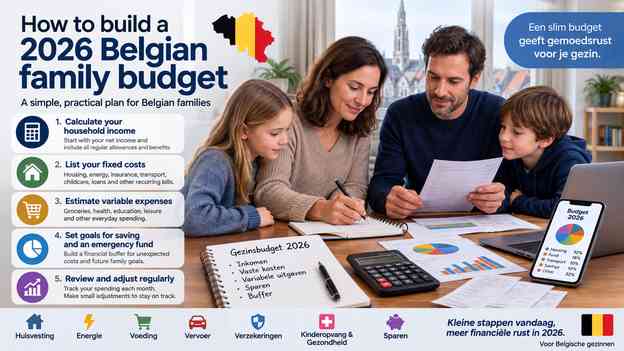
Start with the official spending structure, then adapt it to your own household. A useful order is:
- Secure housing and utility estimates first.
- Add food and essential household supplies.
- Calculate the full cost of commuting and car ownership.
- Set aside monthly amounts for health, childcare, school and insurance.
- Create separate funds for annual bills, repairs, travel and technology replacement.
- Leave a contingency amount for energy or transport volatility.
Do not treat the national percentages as spending targets. They are reference points. A family with a mortgage may have a different housing split from a renter; a household in Brussels may spend less on transport but more on housing; a family in Wallonia may face the reverse.
The best gezinsbudget België plan is one that tracks actual spending for three months, distinguishes fixed and flexible costs, and reviews major contracts at least once a year.
What should Indian families moving to Belgium prioritise?
Indian professionals and families moving to Belgium should prioritise housing location, heating and electricity arrangements, school or childcare needs, and daily commuting before committing to a rental home. A larger apartment outside a city may appear better value, but the saving can disappear if two cars, fuel and longer commutes become necessary.
It is also sensible to budget separately for arrival costs: deposit, temporary accommodation, household basics, local SIM plans, furniture, winter clothing and school setup. These are not signs that the regular family budget is failing; they are predictable establishment costs that deserve their own fund.
FAQ
What is the largest expense in a Belgian family budget in 2026?
Housing, water, electricity, gas and other fuels are the largest expense category. The latest Statbel household survey places them at 30.6% of average household spending.
Is Brussels more expensive for family housing than other Belgian regions?
Brussels households allocate 34.6% of their budget to housing-related costs, compared with 30.5% in Wallonia and 29.9% in Flanders. Individual rents vary, but housing takes a larger share of budgets in Brussels.
Which Belgian region has the highest transport burden?
Wallonia has the highest transport share at 13.1% of household spending. Flanders is at 11.5%, while Brussels is lower at 9%, partly reflecting different transport patterns.
How much of a Belgian family budget goes to food?
Food and non-alcoholic drinks account for 14% of average Belgian household spending. The share is very similar across Belgium’s three regions.
Should a family include energy costs within rent when comparing homes?
No. Families should compare the total housing cost: rent, utilities, water, heating, internet, insurance and any building charges. A lower rent can be misleading if the home has high heating or utility costs.
How can a family reduce budget pressure without cutting essentials?
Review housing and energy arrangements, plan meals, compare commuting options, track annual bills monthly, and delay non-essential device upgrades. The aim is to reduce volatility and avoid surprise costs, not simply to spend less on necessary family needs.